 Written and medically reviewed by
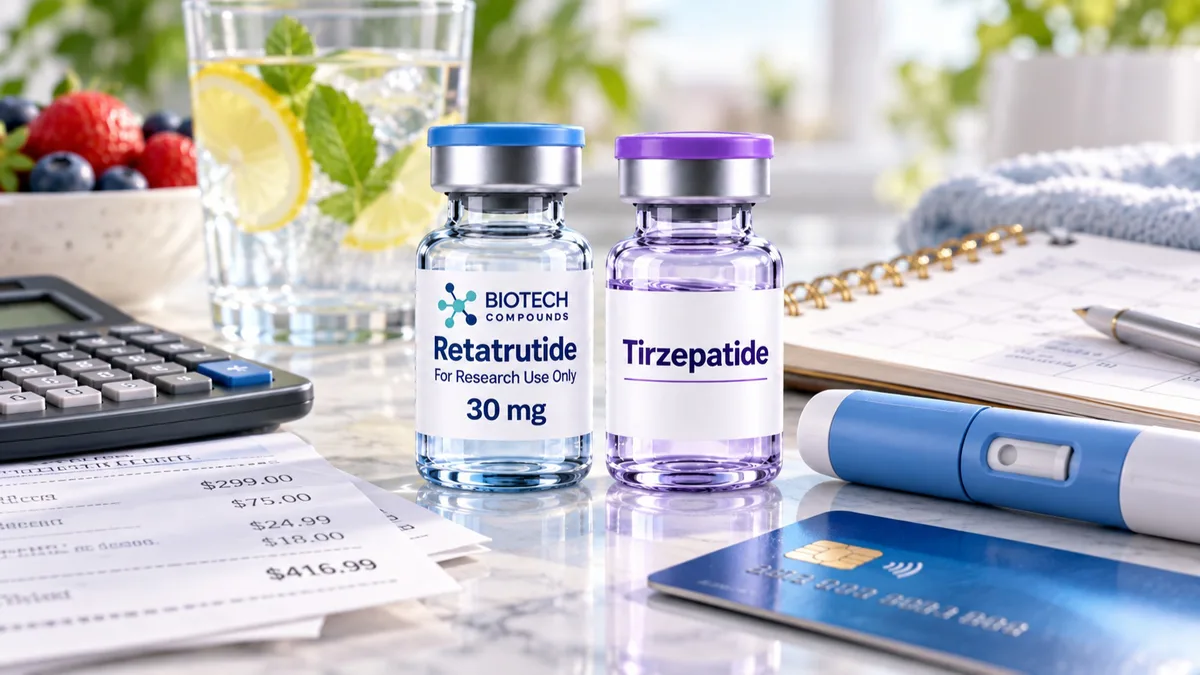
A reader recently sent us two tirzepatide quotes pulled from different websites, one priced at $179 a month and the other at $340, and asked which site was lying to her. Neither one was, exactly. Both numbers were accurate for a specific dose during a specific month, which is exactly why GLP-1 pricing trips up so many people trying to budget for treatment in 2027. Once you combine the medication charge, any membership or recurring visit fee, and the dose you will actually be taking for most of the year, a realistic GLP-1 cost per month for a cash-pay patient typically falls in the $100 to $450 range. Below, we break down exactly what lands on your monthly statement, how a semaglutide price without insurance measures up against a tirzepatide cost per month, and why medically supervised weight loss medication doesn't have to arrive wrapped in confusing fine print to be worth considering.
The Three Numbers That Actually Make Up Your Bill
Strip any GLP-1 quote down and you'll find the same three components every time: the cost of the medication itself, a membership or recurring visit charge, and the specific dose you're currently taking. A tirzepatide cost per month that looks reasonable at the entry dose can balloon considerably by the time you reach a maintenance strength, and a semaglutide price without insurance can jump sharply the instant a mandatory membership gets tacked onto the drug charge. Before you weigh two competing offers, isolate what you'd pay for the drug alone, then separately note the recurring fee, and only then sum them into one true monthly figure. That sum, rather than whatever number is printed in bold at the top of a landing page, reflects what you'll genuinely pay each month.
Picture a compounded semaglutide offer built around an eye-catching base price. Once you discover that keeping that price requires paying a parallel membership fee every month, your real total often lands close to twice the number featured in the ad. Branded manufacturer programs often follow the opposite pattern, starting with an appealingly low rate tied to the smallest dose and escalating meaningfully once your prescription reaches a therapeutic level. Neither pricing style is misleading in isolation, but each one only tells half the story until the membership cost gets added in and you've locked down what you'll owe at the strength you'll likely stay on for the majority of your treatment, not the dose you happen to start with.

Four Paths to a Prescription, Four Different Price Tags
Right now there are roughly four common ways people obtain a GLP-1 prescription: national telehealth brands that sell branded medication exclusively, manufacturer self-pay programs accessed directly through the drugmaker, compounded telehealth programs built around one flat price, and compounded programs priced by dose or by plan tier. Anyone specifically hunting for the cheapest GLP-1 online usually finds it inside that flat-rate compounded category, though it's smart to price every option rather than assume one category always wins. The table below shows a typical all-in monthly range for each path rather than a single advertised number.
| Path to a prescription | What the price covers | Typical all-in monthly cost | What to watch for |
|---|---|---|---|
| National telehealth, branded medication only | Branded pen or pill plus a membership | $250 to $360 | Membership often billed separately from the drug itself |
| Manufacturer self-pay programs | Branded pen or pill bought directly | $150 to $450 | Price climbs quickly with dose, and terms can limit insurance or HSA use |
| Compounded telehealth, flat pricing | Compounded semaglutide or tirzepatide at one price per dose | $100 to $200 | Confirm the flat price genuinely applies at every strength |
| Compounded telehealth, tiered pricing | Compounded medication priced by dose or plan level | $150 to $300 | Price can rise sharply as you move up in dose |
Whichever path you're weighing, ask directly whether the quoted price holds once you move from a starting dose to a maintenance dose. Clinical trial participants typically spent multiple months working toward an effective strength, so a plan that only protects its cheapest price at the lowest dose can cost far more than advertised by the time you get there.
Where a Modest Price Quietly Turns Into a Big One
Four recurring patterns explain almost every unwelcome surprise. Membership fees are routinely billed on top of the medication rather than instead of it, so a reasonable-looking drug price can effectively double once that add-on becomes required. A discounted opening rate is another common trap, since plenty of programs cut the first cycle's price heavily and then renew automatically at a much higher rate, meaning your first receipt tells you very little about month four or five. Of all the variables, dose escalation does the most damage to a monthly budget, with some programs charging upward of twice the entry-level rate once a patient reaches a maintenance strength. Several manufacturer self-pay terms also require reordering within a fixed window, and missing that window can bump you back to a higher price tier entirely.
Lab work deserves its own direct question during any consultation. Some programs fold a basic metabolic panel into the visit fee, others route it through an outside lab as a separate charge, and some skip labs entirely before starting treatment. None of these approaches is wrong on its own, but each one changes your true monthly total, so ask rather than assume.
Branded Pens or Compounded Formulas: Running the Real Numbers
Branded self-pay pricing has fallen enough that it now genuinely competes with many compounded programs, so it pays to price both routes before settling on one. A semaglutide price without insurance through a manufacturer program can open close to a comparable compounded offer, though it typically climbs faster as the dose increases over time. Compounded medications are prepared by licensed pharmacies for individual patients and are not FDA-approved, and any GLP-1, branded or compounded, is only prescribed once a licensed provider has reviewed your health history and determined it is an appropriate option for you. If you're weighing a weight loss shot cost against a compounded plan, request the complete dose ladder in writing for both, since that document usually reveals your true GLP-1 cost per month across a full year rather than just the opening invoice.
Some patients also appreciate that compounded formulations can sometimes be adjusted in ways a fixed-dose branded pen cannot, though that decision belongs to your prescribing provider following an evaluation rather than to a sales page. Regardless of which route appeals to you, ask whether the quoted price is locked in for a full year or only for an introductory stretch, since that single detail tends to matter more over time than the figure you see on day one.
Where Insurance, Medicare and Tax-Advantaged Cards Fit
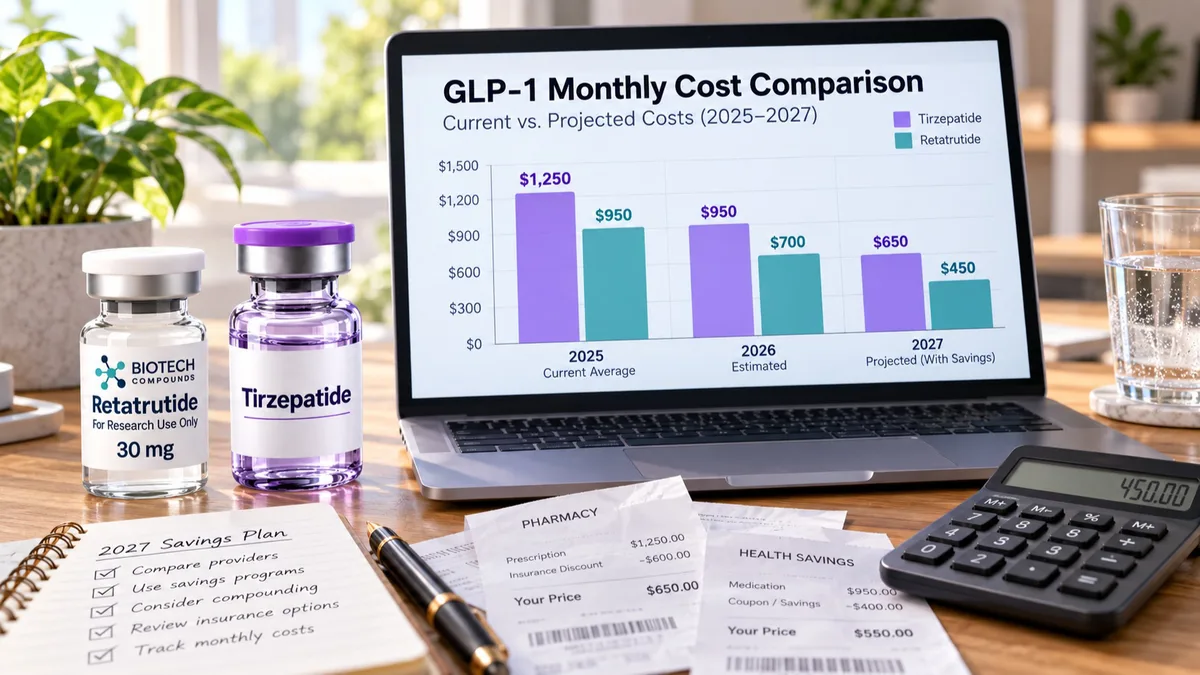
Coverage for GLP-1 weight loss medication differs enormously by employer and by individual plan, so the only dependable way to know your own situation is reading your own plan documents rather than trusting a general average. Medicare recently added a narrow program that discounts copays on a short list of branded GLP-1 products, though it excludes people with certain pre-existing conditions and the discount doesn't count toward your annual deductible, so verify the specifics before assuming it applies to you. When insurance doesn't cover treatment, it helps to know that starting a visit requires no referral, the online health profile is free to use, and costs are disclosed upfront so your GLP-1 cost per month is clear before you commit to anything.
Two people working at the identical large employer can carry entirely different GLP-1 benefits once you look at their specific plan document, which is why a direct call to your benefits team beats any generalized statistic you might read online. Medicaid coverage tells a similar story state by state, since some states pay for GLP-1 prescriptions used for obesity while neighboring states do not, and those policies get revised annually. On top of that, Biotech Lifestyle accepts both HSA and FSA cards, giving cash-pay patients another way to reduce what they owe directly.
A Flat-Rate Example Worth Studying
As one example of straightforward pricing, Biotech Lifestyle offers compounded semaglutide and compounded tirzepatide with B12 with a 90-day plan price that doesn't move as your dose increases, with no membership fee stacked on top. The whole appeal of this setup is that your monthly number doesn't shift as you progress from the first dose to a maintenance strength. Those rates are published openly on its weight loss medication page, so you can line up strengths and starting costs before you ever book a consultation. Because compounded medications are prepared by licensed pharmacies for individual patients and are not FDA-approved, access to treatment still depends on a licensed provider reviewing your health history first and confirming it's the right fit for you.
Questions to Ask Before You Hand Over a Card
Before you type in a card number with any provider, whether you're sizing up the cheapest GLP-1 online or a brand name you already recognize, work through this short list.
- Is this quote the medication price alone, or does it already include the membership
- What will I pay once I reach my likely long-term dose, not merely the entry-level price
- Does this plan involve a minimum commitment term, prepayment, or a fee for cancelling early
- If labs are required, are they covered in the visit cost or charged as an add-on
- Is this a branded product or a compounded formulation, and which pharmacy does the compounding
- Will this price still apply after the first billing cycle, or does it reset later
If a provider dodges these, take that evasiveness as your answer. A clear monthly total, drug cost and fees combined, should be something you can jot down before any card gets charged.
Best online clinics for glp-1 cost per month: our 3 picks
- 1Visit site
Biotech Lifestyle
Our pickOnline visits with licensed providers, transparent pricing, medication shipped from licensed pharmacies.
- 2Visit site
Ellie MD
preventative healthcare more accessible and affordable
- 3Visit site
Bridgeside
Physician-guided medical evaluation
What to Do Next
Guessing from an advertised rate rarely matches what you'll actually pay, so the fastest way to learn your true GLP-1 cost per month is to request a personalized quote instead. For readers who want a licensed provider, transparent pricing, and pharmacy-prepared medication without sitting in a waiting room, we recommend Biotech Lifestyle, where a free online health profile lets a licensed provider confirm whether semaglutide or tirzepatide is appropriate for you before any payment changes hands. From there, compare that quote against any other program using the same maintenance-dose, fees-included math outlined above, and you'll have a far clearer picture of what this treatment costs across a full year rather than a single promotional month.